As the conflict in the Persian Gulf enters its third week, investor focus is beginning to shift from event risk to duration risk. Simply put, the longer the conflict persists, the greater the potential damage to the global economy.
In contrast to predictions from President Trump that the conflict could end quickly, Iran’s new Supreme Leader, Mojtaba Khamenei, has taken a more confrontational stance. In his first public remarks since the escalation, he stated that the Strait of Hormuz should remain closed and suggested that Tehran could open additional fronts if the attacks continue.
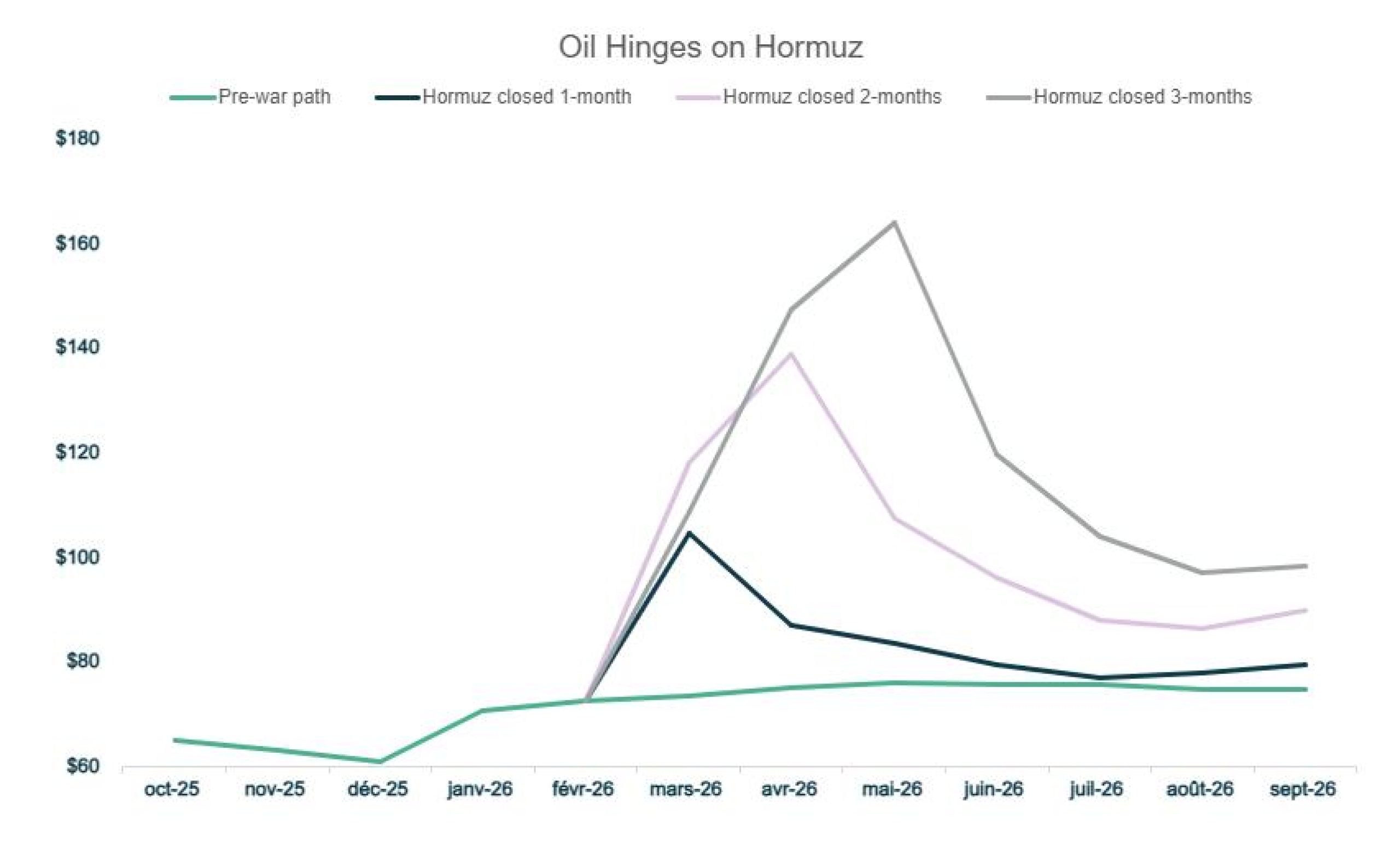
The implications for energy markets are significant. According to Bloomberg Economics Brent Crude Oil could trade around $105/barrel if the Strait of Hormuz remains closed for one month. Should the disruption extend to three months, prices could rise as high as $164/barrel – levels that would likely have a material impact on global economic growth.
In response, the International Energy Agency (IEA) has authorised a record 400-million-barrel release from emergency reserves, while the U.S. has temporarily allowed the sale of previously sanctioned Russian Oil in an attempt to moderate prices.
Although both measures demonstrate awareness of the risk posed by elevated energy prices, neither is sufficient to replace the 20 million barrels of oil which transit the Strait of Hormuz each day.
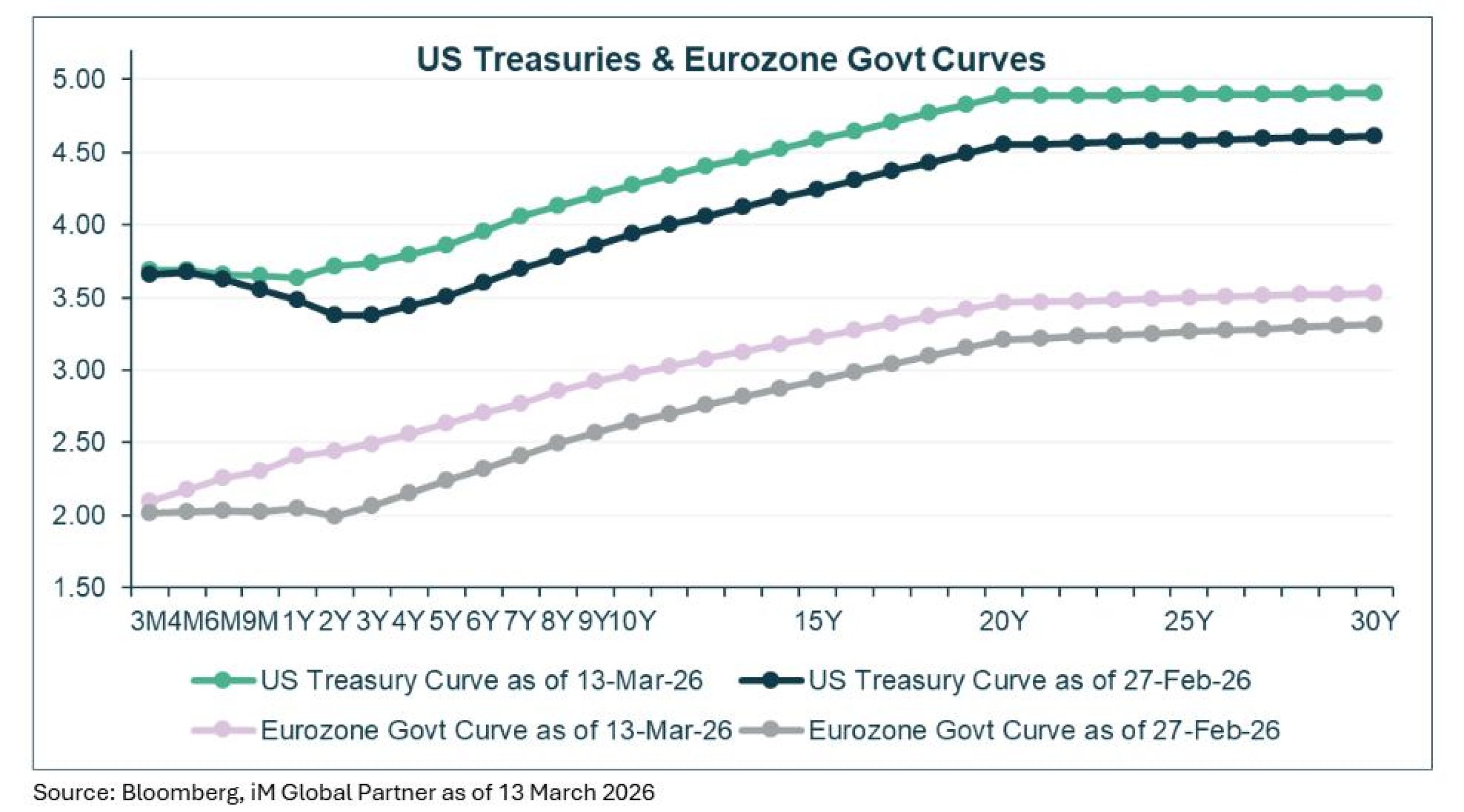
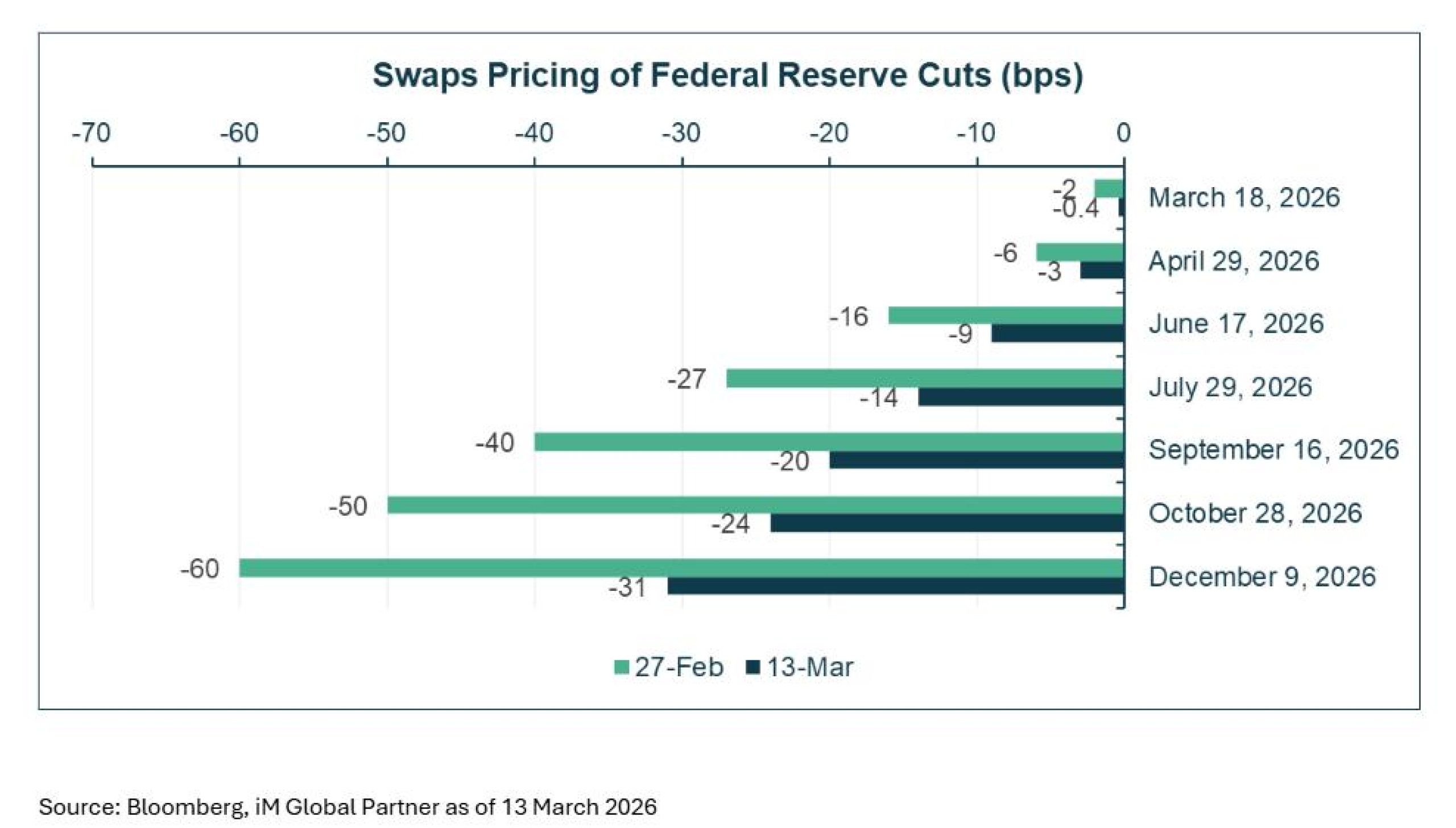
Financial markets have already begun to price in the implications of higher energy prices. In March, yields on both the 10-year U.S. Treasury bonds and Eurozone government bonds have risen by more than 30 basis points, pushing bond prices down and decreasing the odds of near-term interest rate cuts by the Federal Reserve.
At this stage of the conflict, the only certainty remains uncertainty. We do not believe a continued conflict is in the interest of either the U.S. or Iran; however, at the time of writing there does not seem to be any obvious off-ramp from the conflict.
In times of market volatility, the value of diversifying and defensive holdings becomes key for investors. This is particularly relevant given the asymmetrical nature of investment losses: a 20% decline requires a 25% gain simply to return to the starting point. As a result, the ability of a portfolio to weather market volatility is crucial. Avoiding large drawdowns can be just as powerful for long-term wealth creation as capturing all the upside in bull markets. Strategies with superior upside/downside capture ratios can help smooth the return profile of a portfolio and reduce the magnitude of losses during difficult market environments.
By helping preserve capital and moderate drawdowns, defensive equity and resilient fixed income strategies can support a more consistent path toward long-term investment objectives.
Authored by
Greg Clerkson